How to prune a palm tree correctly
A practical guide to correct palm tree pruning: assessment, frond selection, safe cuts, work at height and common mistakes.
What the decision should be based on
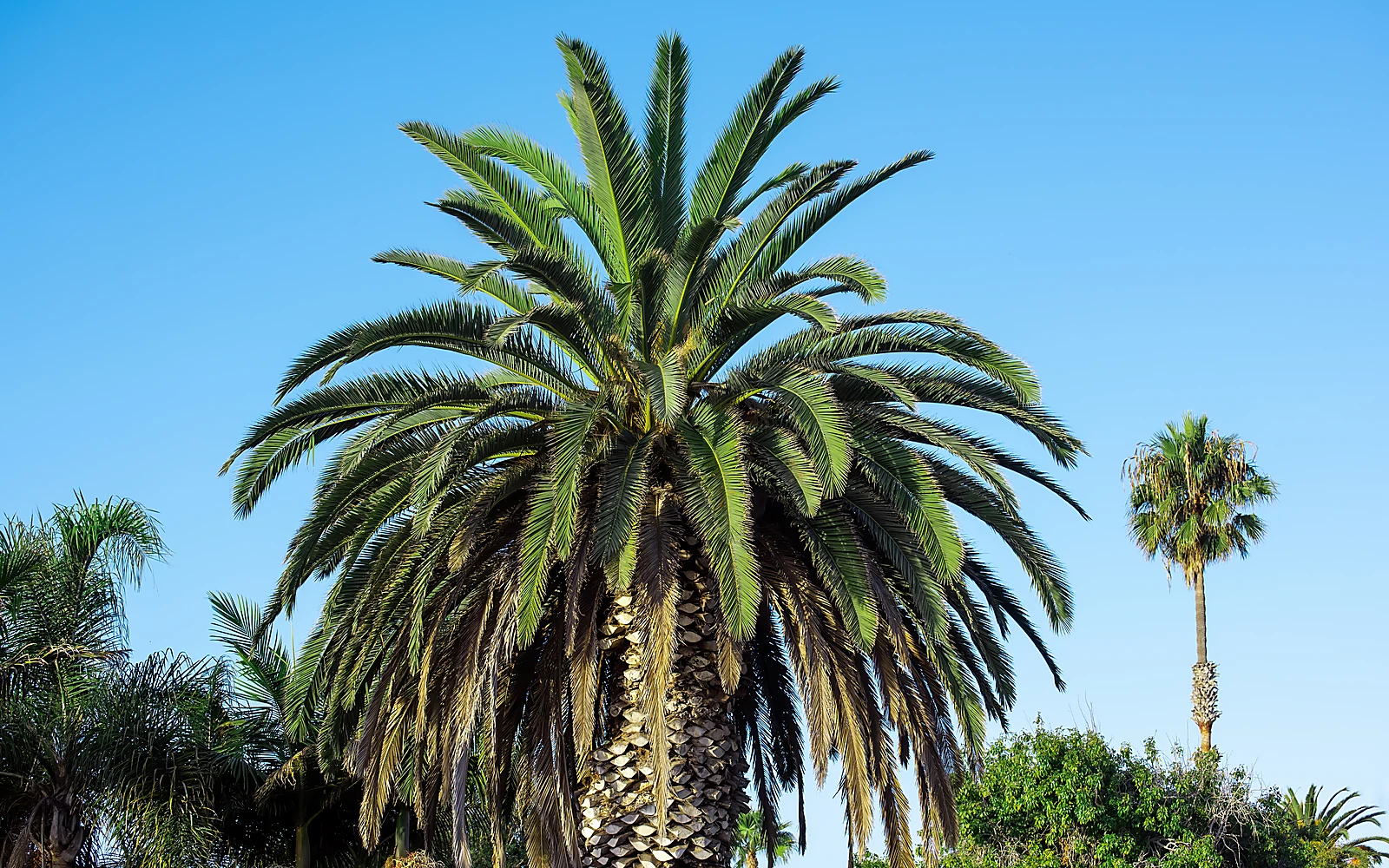
A palm should not be treated like a broadleaf tree. Its architecture is different and its main growing point is concentrated in the crown. Removing too many green fronds does not rejuvenate it. Good pruning is selective: it solves a maintenance or safety problem while leaving enough healthy foliage for normal function.
How to plan the work
The sequence matters. First assess species, crown density, old fruit stalks, damaged leaves and any signs that suggest a health problem. Then decide how the crown will be reached. At ground level, prepare the drop zone and protect roofs, paving, pools and planting before cutting starts.
What to avoid
Cuts should be clean and controlled, without gouging the trunk or damaging the central bud. Dry fronds can usually be removed first. Green leaves require a reason, not a habit. Flowers and fruit stalks may be removed where they create weight, mess or a practical problem, but that is different from indiscriminate defoliation.
A practical maintenance approach
Height changes the method completely. A small ornamental palm may be manageable from the ground, while a tall Phoenix or Washingtonia can require a platform, climbing system or controlled lowering of material. The correct technique is therefore a combination of biological criteria and safe access planning.
At a glance
| Situation | Recommended approach |
|---|---|
| Before cutting | Identify species, condition and access |
| During cutting | Prioritise dry, broken or justified material |
| Crown | Protect the central growing point |
| Ground area | Control the drop zone and protect property |
Professional checklist
- Confirm the species and overall health
- Choose access equipment for the real height
- Remove dry or broken material first
- Avoid trunk damage and unnecessary green-frond removal
- Plan waste handling before material reaches the ground
Safety, access and the work zone
Palm fronds can be large, fibrous and surprisingly heavy. For that reason, professional pruning is not only about making a clean cut. The team must control the area below the crown, decide where material can fall or be lowered, protect pools and delicate surfaces and keep people outside the working zone. High palms may require a platform or specialist climbing system depending on access. Wind conditions can also change a seemingly simple job. A sensible quotation therefore considers height, crown volume, obstacles and waste removal together. When a palm stands beside a road, house or pool, controlled handling of each frond is often more important than speed.
Palm health matters more than appearance
A tidy crown can be attractive, but appearance should not override biology. Palms rely on their active green fronds, so the goal is not to strip the crown until only a narrow tuft remains. Yellowing, spotting or unusual asymmetry should also prompt a closer look before material is removed. Those signs can reflect natural ageing, nutrition, irrigation, mechanical damage or pests. Cutting away every imperfect-looking frond may hide useful evidence without addressing the cause. The best maintenance leaves a crown that looks cared for because it is well managed, not because it has been aggressively reduced.
Red palm weevil and fresh pruning wounds
In the Valencian Community, red palm weevil is part of the maintenance context, especially for Phoenix palms. Regional plant-health guidance recommends avoiding severe pruning and, where possible, prioritising dry fronds. This does not mean that every necessary cut is dangerous or that urgent work should be postponed. It means pruning should have a reason and unnecessary wounds should be avoided. If suspicious symptoms are present, diagnosis and pest management may need to come before cosmetic pruning. That is why pruning and plant-health inspection should be treated as connected services rather than completely separate tasks.
What happens to the material after cutting
A palm-pruning job can generate a large volume of bulky material. Fronds, petioles, fruit stalks and old leaf bases take space and can have sharp edges. Planning disposal from the start keeps the property safer and prevents the customer from being left with a mountain of waste. On constrained sites, material may need to be lowered in smaller sections and moved through narrow access points. A professional service should therefore think about cutting, ground handling, loading and final cleaning as one continuous process. This is especially important around swimming pools, paved terraces and landscaped gardens where dragging heavy fronds can damage finishes.
When to request a professional assessment
A professional assessment is particularly useful when the palm is high, close to a building, above a pool or road, difficult to access, showing unusual symptoms or carrying heavy dry material. Sending clear photographs by WhatsApp can be a useful first step because it shows the crown, approximate height and surrounding obstacles. For complex jobs, an on-site visit may still be needed before a firm plan is made. Podas de Palmeras Marina Alta offers free, no-obligation estimates across the Marina Alta and can assess pruning, access, waste removal and any related concern in the same visit.
Documentation and follow-up
Good palm maintenance is easier when each intervention leaves a simple record. A few clear photographs before and after the work, notes about the material removed and any unusual crown symptoms create a useful baseline for the next inspection. This is particularly valuable on properties with several palms, where different species and heights may have different maintenance rhythms. Documentation also prevents the next visit from becoming a guess about what was done previously. If a palm changes quickly between inspections, comparison photographs can help distinguish normal ageing from a new problem and make the conversation with a specialist more precise.
Why every quotation is different
Even when two palms look similar in photographs, the practical cost of pruning can differ because access and handling are different. A palm beside an open driveway is not the same job as one behind a wall, above a glass enclosure or surrounded by a swimming pool. Height, crown density, platform access, parking, waste volume and the need to lower fronds under control all affect the plan. This is why a starting price is useful as a reference but a final quotation should be based on the actual palm and property. Clear photographs normally make that first estimate faster and more accurate.
How to assess a palm before pruning
Before any pruning, look at the whole palm rather than a single brown frond. The crown should be viewed from several angles, the trunk checked for obvious damage and the ground area reviewed for people, vehicles, roofs, pools and garden furniture. Height matters because the same pruning decision can require a completely different work method at three metres and at twenty metres. In Marina Alta, access is often the hidden factor: narrow villa entrances, sloping plots and walls can determine whether a mobile elevating work platform is practical. A professional assessment therefore joins plant care and site logistics. It also helps avoid cutting first and discovering later that the real issue was a pest, irrigation problem or unstable access.
Related professional services
You may also find useful: professional palm tree pruning, tall palm tree pruning, red palm weevil treatment — request a free quote.
Palm pruning in Marina Alta
In Marina Alta, the question “How to prune a palm tree correctly” should always be interpreted in the context of Mediterranean weather, villa gardens, pools, walls and the local presence of palm pests. A useful answer therefore combines the biological needs of the palm with the real conditions of the property. If access is difficult or the crown is high, photographs from several angles make the first assessment much more useful.
Technical references
For technical criteria we also consider current Valencian plant-health guidance and palm-pruning guidance from recognised extension sources.
Would you like us to assess your palm?
Send us photos of your palm tree on WhatsApp and we can make an initial assessment. Free, no-obligation quote throughout Marina Alta.
Frequently asked questions
Should all downward-facing green leaves be removed?
No. Position alone is not a sufficient reason to remove a healthy green frond.
Can the trunk be shaved smooth?
Aggressive trunk cleaning can create unnecessary wounds; controlled maintenance is preferable.
Is a cherry picker always required?
No. The method depends on height, access and site constraints.